Our AI runs its own research.
We advance frontier AI research and prove it in live operations — a lab that refuses to stay in the lab. Two things make that possible: an AI that runs its own research, and a device that gives it eyes and ears on the floor.
Most AI sees a business through its software: the bits. The physical economy runs on bits and atoms: pallets, lines, crews, weather. Our research closes that gap, so a plan and reality are reconciled continuously, not at the next manual check.
An AI that writes its own research playbook.
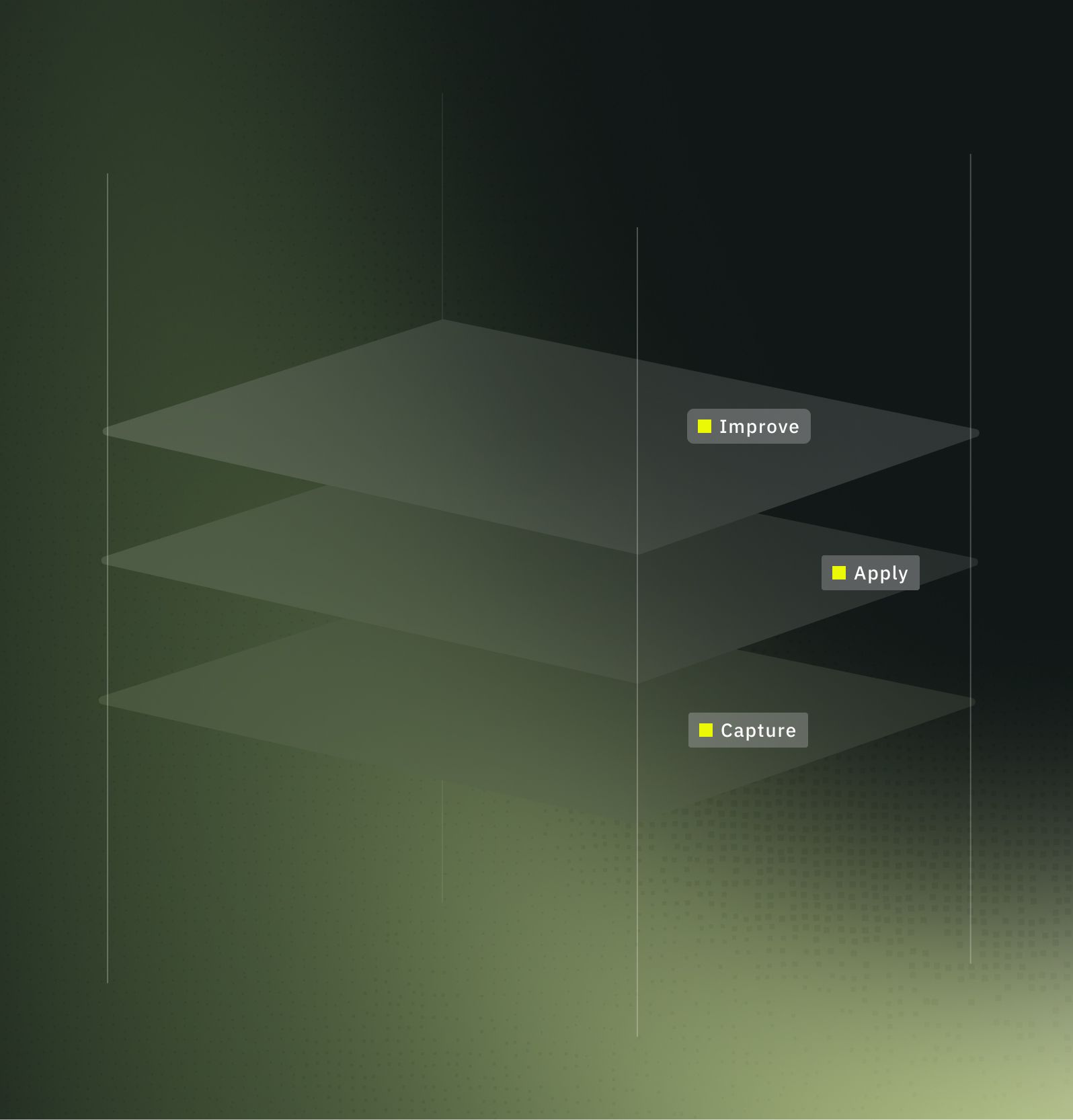
Auto-research proposes ideas, builds and runs hundreds of scored experiments in parallel, drops what fails and compounds on what works — run after run, with no one in the loop. Every attempt is scored by a sealed evaluation the agents can't touch.
You bring the problem, the metric and the data. If it can be scored, auto-research can work on it. It's also the platform our own lab runs on — which is why it keeps getting better.
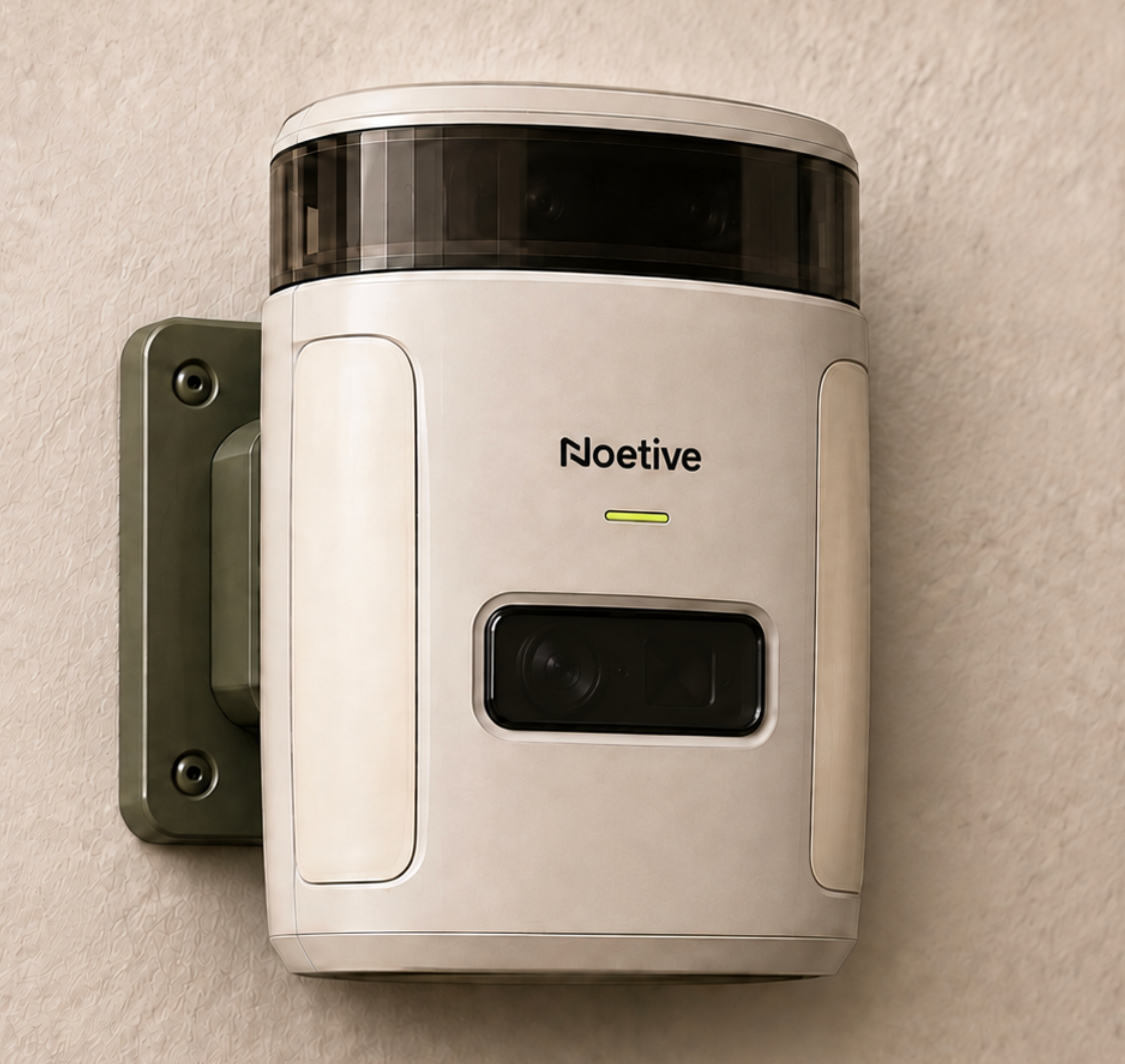
A sensing pod that grasps reality and provides spatial intelligence
Our sensing pods give operations spatial intelligence: a multimodal read of what's actually happening on the ground, fused with the data already sitting in your systems of record.
Across the physical industries planning has always run on numbers in a database; we add the physical reality those numbers are meant to describe - the layout, the movement, the state of the work as it unfolds - into one living picture of the operation.
This closes the loop between the plan and the floor. Every decision meets the real world, and what actually happens flows straight back to sharpen the next one. No plan survives first contact with reality, so we make reality part of the plan.
Auto-research proposes ideas, builds and runs hundreds of scored experiments in parallel, drops what fails and compounds on what works — run after run, with no one in the loop. Every attempt is scored by a sealed evaluation the agents can't touch.
You bring the problem, the metric and the data. If it can be scored, auto-research can work on it. It's also the platform our own lab runs on — which is why it keeps getting better.
Our sensing pods give operations spatial intelligence: a multimodal read of what's actually happening on the ground, fused with the data already sitting in your systems of record.
Across the physical industries planning has always run on numbers in a database; we add the physical reality those numbers are meant to describe - the layout, the movement, the state of the work as it unfolds - into one living picture of the operation.
This closes the loop between the plan and the floor. Every decision meets the real world, and what actually happens flows straight back to sharpen the next one. No plan survives first contact with reality, so we make reality part of the plan.
We're an applied research lab that refuses to stay in the lab.
Frontier AI only matters if it survives contact with reality, so we take ours straight into the physical economy, working with a small set of design partners and earning our way on the hardest problem at the core of how each business runs.
We're starting deliberately across three very different worlds: manufacturing, logistics, and construction to prove the thesis holds in the real world, that our research generalizes and delivers measurable value rather than overfits to a single domain.
How does our self-improving AI work?
Propose
Agent teams read the problem and generate candidate approaches.
Models, agents or the skills an agent needs – whatever shape fits the problem. When a dataset or a proxy evaluation doesn’t exist, the system builds it along the way.
Run
Hundreds of experiments, in parallel, under a fixed budget.
Each one a self-contained program from raw data to a graded result. No humans in the loop; a sealed evaluation the agents can’t touch does the scoring.
Keep
What scores stays and seeds the next round.
What doesn’t is dropped. The resarch playbook rewrites itself as it goes – which is how a run that started this morning ends the day ahead of where it a team otherwise would have fotten it.